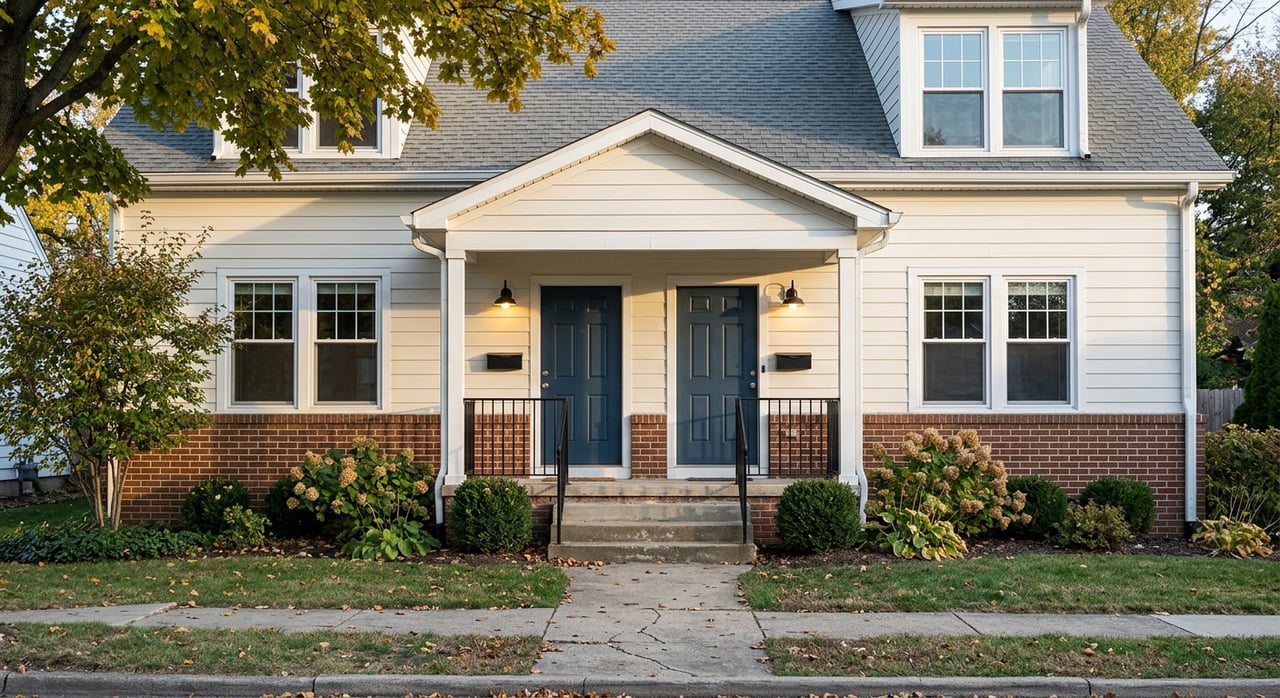
Curious if a Bloomington rental is a smart buy? If you have heard investors talk about cap rates but are not sure how to use them, you are not alone. With student seasonality and neighborhood differences near Indiana University, it helps to know how to calculate and compare deals the right way. In this guide, you will learn what cap rate means, how to compute it step by step, and how local factors can change returns so you can make a confident decision. Let’s dive in.
What cap rate means
Simple definition
Cap rate, short for capitalization rate, estimates a property’s unlevered return. It is calculated as Net Operating Income (NOI) ÷ Purchase Price. NOI is your rental and other property income minus operating expenses, before any mortgage payments and before income taxes.
- Cap rate = NOI ÷ Purchase Price
- NOI = (Gross Scheduled Income × (1 − Vacancy Rate)) + Other Income − Operating Expenses
What cap rate does and does not show
Cap rate is designed to compare properties and submarkets quickly using a standardized approach. It is best for screening and underwriting. Keep these limits in mind:
- It ignores your financing terms, tax situation, and appreciation.
- It is sensitive to assumptions about vacancy and expenses.
- It does not capture timing of cash flows. Use cash on cash and IRR when you model financing and multi‑year holds.
- One‑time items like deferred maintenance can distort the number if you do not adjust.
How to calculate cap rate
Step by step
- Estimate potential gross rental income. Use market rents by unit type multiplied by 12 months.
- Subtract vacancy and collection loss to get Effective Gross Income (EGI).
- Add other income, such as laundry, parking, or pet fees.
- Subtract operating expenses that an owner pays: property taxes, insurance, utilities paid by owner, repairs and maintenance, property management, HOA, landscaping, legal, advertising, and reserves for replacements. Do not include mortgage payments or income taxes.
- The result is NOI. Divide NOI by your purchase price to get the cap rate.
Illustrative example
The numbers below are for illustration only to show the math.
- Purchase price: $200,000
- Gross scheduled rent: $1,000 per month × 2 beds × 1 unit = $24,000 per year
- Vacancy and collection: 8% → EGI = $24,000 × 0.92 = $22,080
- Other income: $600 per year
- Operating expenses (example):
- Property taxes: $2,200
- Insurance: $900
- Maintenance and repairs: $1,800
- Property management: 8% of EGI = $1,766
- Owner‑paid utilities: $1,000
- Reserves for replacements: $1,200
- Total operating expenses: about $9,866
- NOI = EGI + other income − operating expenses = $22,080 + $600 − $9,866 = $12,814
- Cap rate = $12,814 ÷ $200,000 = 6.4%
Sensitivity matters in Bloomington
Near Indiana University, vacancy can be seasonal. If average vacancy rises to 12% due to lease timing, and maintenance runs higher because of turnover, NOI falls and the cap rate declines unless the price adjusts. Always run both a conservative case and a higher‑vacancy, higher‑expense case to see how fragile or resilient a deal is.
Bloomington factors that move cap rates
Demand drivers near IU
Indiana University’s enrollment and campus workforce create recurring rental demand anchored to the academic calendar. Homes and small multifamily within walking distance or a short transit ride to campus and downtown tend to see strong interest. Off‑campus tenants include graduate students, young professionals, and families with steadier lease terms.
Seasonality and vacancy patterns
Student‑oriented properties usually show more seasonality. Occupancy is strong during academic months, with heavier turnover and potential summer gaps if lease timing does not align. Non‑student tenants can offer steadier occupancy, but they may not support the same per‑bedroom rent premiums as near‑campus student housing.
Operating expenses to watch
- Property taxes: Monroe County property taxes can meaningfully impact NOI. Review the latest tax bill and Indiana rules on deductions or credits to estimate a realistic annual number.
- Insurance: Premiums vary with property age, occupancy type, and coverage. Student rentals can carry higher liability exposure.
- Maintenance and turnover: Student rentals often need more frequent painting, cleaning, and repairs, and they may require more frequent capital expenditures.
- Utilities: Near‑campus rentals sometimes include utilities in the rent, which raises operating costs. Confirm exactly what the owner pays.
- Property management: Full‑service management fees for small properties often run around 8 to 12% of collected rent locally. Student housing management may cost more due to turnover and leasing intensity.
- HOA and code compliance: Condo or HOA fees reduce NOI directly. Also confirm any licensing, inspection, or registration requirements in the City of Bloomington.
Cap rate ranges as a guide
Use these as rough screening bands, then verify with current local sales and comps:
- Small single‑family a moderate distance from IU: commonly targeted around 5 to 8%, depending on condition and market trends.
- Small multifamily close to campus: often targeted around 6 to 10% based on condition, lease stability, and management intensity.
- Purpose‑built student rentals or higher‑maintenance, high‑turnover properties: some investors target 7 to 12% to compensate for added expense and risk.
These are illustrative, not a rule. Local transaction data provides the most accurate read on market‑accepted caps.
Student vs non‑student rentals: what changes
- Lease structure: Student leases may run 9 to 12 months and often renew around the same season. Non‑student leases can be more flexible.
- Vacancy risk: Student rentals face higher vacancy risk around summer if you miss the leasing window. Non‑student rentals can be steadier, though they may have lower rent per bedroom.
- Expenses: Expect higher turnover costs and more frequent capex for student properties. Non‑student rentals may offer lower expenses but also lower headline rents.
- Management intensity: Student rentals can require more leasing, marketing, and coordination, which can increase management fees.
A practical underwriting checklist
Use this simple framework to compare Bloomington properties on equal footing:
- Standardize income assumptions.
- Verify market rents for each unit type using multiple comparables.
- Apply a vacancy rate that reflects the tenant profile. Use higher, seasonal vacancy for student rentals.
- Standardize expenses.
- Use the same categories across deals: taxes, insurance, owner‑paid utilities, repairs, maintenance, management, HOA, reserves for replacements.
- Express variable costs as a percent of EGI and fixed items in dollars per year.
- Calculate NOI under the same rules for each property.
- Compute cap rate as NOI ÷ Purchase Price.
- Run sensitivities.
- Test higher vacancy, higher repair and turnover costs, and any near‑term capital projects like a roof or HVAC.
- Layer in financing.
- For a financed deal, calculate cash on cash: (NOI − Debt Service) ÷ Cash Invested. Include down payment, closing costs, and planned rehab.
- Check qualitative factors.
- Evaluate proximity to IU, transit, parking, neighborhood context, and any planned nearby development.
- Confirm legal items.
- Review short‑term rental rules, licensing, occupancy limits, and landlord registration requirements.
- Pull local comps.
- Use recent sales and rent comps and consult local property managers for realistic expense benchmarks.
When to use cap rate vs other metrics
Cap rate is excellent for comparing unlevered performance across properties and neighborhoods. Use it for first‑pass screening and to negotiate on price when you know your target NOI. After that, evaluate cash on cash and build a simple multi‑year cash flow or IRR model to see how financing, rent growth, and exit assumptions affect your return.
Putting it all together
If you are weighing a house on the near‑west side versus a small triplex closer to campus, normalize the income and expenses, compute NOI, and compare cap rates side by side. Then run a higher‑vacancy case for the student‑oriented option and add realistic turnover and capex. The property with the best cap rate may not win once you consider seasonality, management intensity, and financing, but cap rate will help you price risk and set realistic expectations.
Ready to evaluate specific addresses or build a side‑by‑side comparison? Connect with local advisors who understand Bloomington’s leasing cycles, Monroe County taxes, and how near‑campus micro‑markets trade. Reach out to Realty Professionals for help analyzing and evaluating your next purchase or to discuss property management and leasing strategies.
FAQs
What is a good cap rate for Bloomington rentals?
- Use rough screening bands of about 5 to 8% for small single‑family, 6 to 10% for small multifamily near campus, and 7 to 12% for higher‑turnover student rentals, then verify with recent local comps.
How do I estimate vacancy for student rentals near IU?
- Assume higher, seasonal vacancy and test a scenario 4 to 8 percentage points above a base case. Align lease timing with the academic calendar to reduce summer gaps.
Do Monroe County property taxes affect cap rate a lot?
- Yes. Property taxes flow directly into operating expenses, which reduce NOI and cap rate. Always review the latest tax bill and apply realistic annual figures in your pro forma.
Should I rely only on cap rate when buying in Bloomington?
- No. Use cap rate for unlevered comparison, then layer in cash on cash, debt service, and a multi‑year model to capture financing, rent growth, and exit timing. Ask Realty Professionals to also provide a comparative market analysis of the type of property you are interested in.
How should I compare two rentals near campus vs farther out?
Standardize rents, vacancy, and expenses for both. Calculate NOI and cap rate, then run sensitivities for higher vacancy and turnover on the near‑campus unit before choosinger vacancy and turnover on the near‑campus unit before choosing.